
USS Abraham Lincoln returns to San Diego after extended deployment
The carrier came home Thursday after more than 300 days at sea, ending a deployment marked by operations in the Middle East and concerns over crew conditions.
The Big Picture
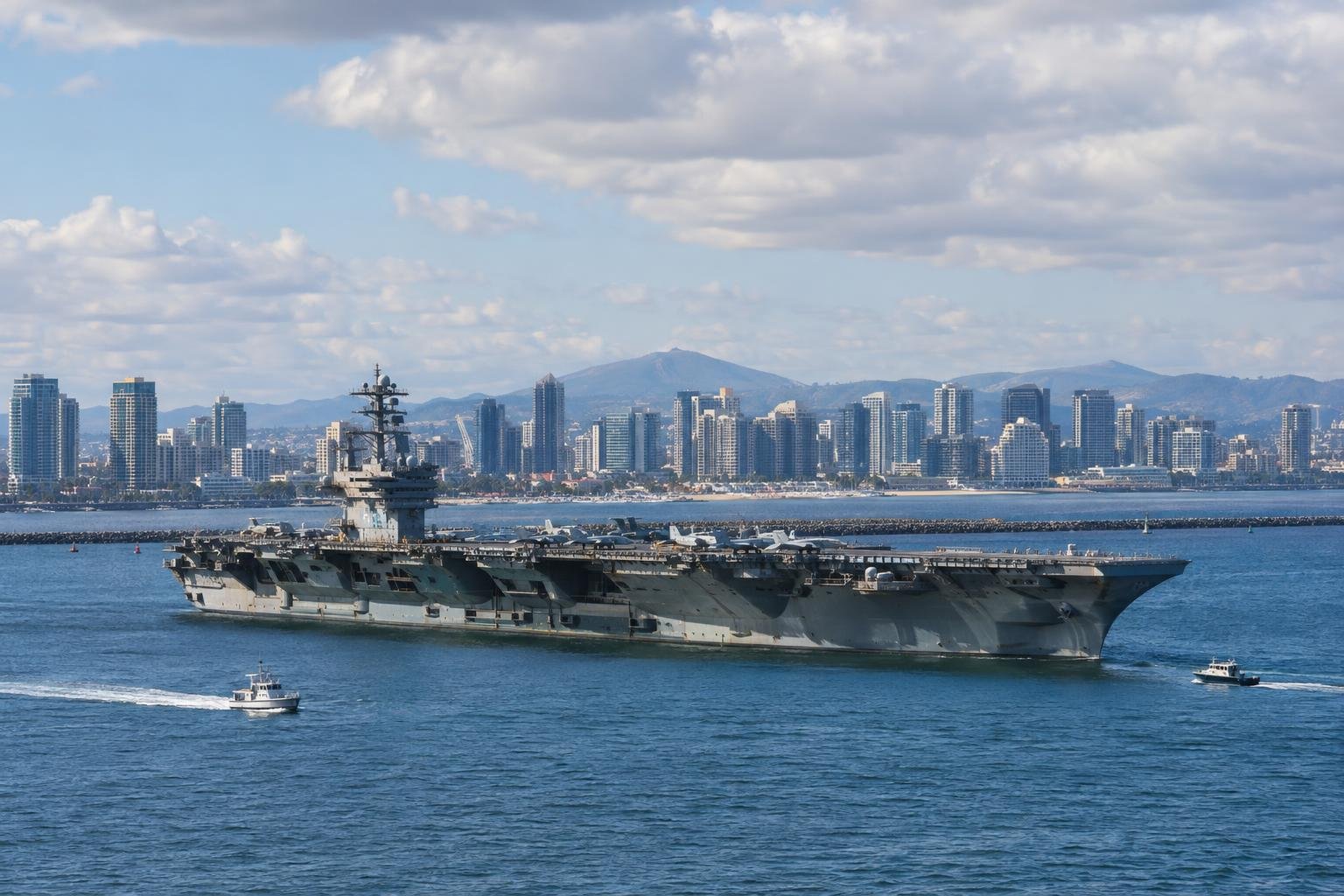
The USS Abraham Lincoln returned to Naval Air Station North Island in San Diego on Thursday, ending an extended deployment in which the aircraft carrier spent more than 300 days at sea.
The ship had left San Diego in November 2025 and was initially expected to return before or during the summer. Its mission was extended after the U.S.-Israel war with Iran began in late February, and the carrier was redirected to support U.S. operations in the Middle East.
Accounts differ slightly on the precise length of the deployment. The Associated Press, NPR, Al Jazeera and The Hill reported it lasted 322 days, while CBS News reported 321 days. All described it as one of the longest recent carrier deployments.
What Happened
Families and friends gathered in San Diego to welcome home sailors and Marines, with some service members meeting children born during the deployment for the first time. NPR reported that 64 fathers from the ship were returning to meet their babies, a figure that rose to 122 when the air wing was included.
For many families, the homecoming followed months of concern about conditions aboard the carrier. Reports during the deployment raised questions about reduced food supplies or meal options, limited opportunities for resupply, crew morale and mental-health strain.
Capt. Daniel Keeler, the ship's commander, told NPR that crew members had access to four meals a day and said difficulties such as equipment issues were normal during a deployment of that length. Acting Navy Secretary Hung Cao said in August that the carrier had maintained adequate food supplies, though combat operations had limited resupply opportunities and reduced meal options for a period, NPR reported.
The Lincoln made a brief port call in Thailand while returning from the Middle East, reports said. Its period without a port call has been variously reported as 265 days, 286 days or more than 250 days, although multiple outlets characterized it as a Navy record for uninterrupted time at sea.
Why It Matters
The carrier's deployment became a focal point in the debate over the human costs of a prolonged naval mission during the Iran war. Navy information provided to lawmakers said eight service members in the Lincoln and its strike group attempted suicide during the deployment. NBC News reported that no deaths aboard the ship had been attributed to suicide.
The reports prompted concern among military families and lawmakers about whether sailors were receiving sufficient resupply, communication and mental-health support during an unusually long mission. The eight attempts involved personnel from the carrier, its air wing, strike group, escorting destroyers and embarked aviation squadrons, according to a Navy letter obtained by NBC.
The carrier's return also illustrates the operational demands placed on the Navy's fleet as the conflict with Iran continues. The Guardian reported that the USS Theodore Roosevelt was recently dispatched to the Middle East, while Navy officials said they were taking steps intended to avoid similar problems during future extended deployments.
What Each Side Is Saying
Defense Secretary Pete Hegseth visited the Lincoln on Wednesday, a day before it docked, and presented the carrier strike group with a Presidential Unit Citation. He acknowledged his role in the two extensions, telling the crew, "I'm the one who signed that orders go twice to extend you" and "I plead guilty," according to multiple reports.
Hegseth also rejected descriptions of the Lincoln as a "symbol of dysfunction," "low morale" or a "failed mission." He praised the crew's ability to continue its mission despite the long deployment and resupply challenges.
Some relatives offered a different account after sailors returned. NPR reported that family members said they had worried over reports of shortages and deteriorating conditions, while one sailor's spouse said her husband had described a lack of food and showers. The reports do not establish that all personnel experienced the same conditions, but they have intensified scrutiny of the Navy's handling of the deployment.
What Happens Next
The Lincoln's crew will begin post-deployment reunions and recovery after nearly 11 months away from home. Lawmakers who sought information on the suicide attempts have also requested further detail from Navy leaders on the circumstances and on steps to protect sailors' mental health during future extended deployments.
The world's most important stories. Explained clearly. Delivered daily.
- Every morning
- Five-minute read
- Unsubscribe anytime