
Disney and ABC Sue FCC Over Early Broadcast License Renewals
The companies say the Trump administration used the FCC to retaliate against ABC for its news coverage and entertainment programming.
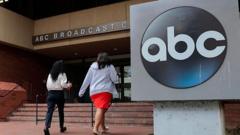
The Big Picture
Disney and ABC have filed a federal lawsuit against the Federal Communications Commission and Chairman Brendan Carr, accusing the Trump administration of using broadcast-license regulation to punish the network for programming the president dislikes.
The case centers on an FCC order requiring eight Disney-owned ABC stations to begin a license-renewal review years before their ordinary schedule. Disney and ABC say the action is an unprecedented effort to suppress protected speech, pointing to President Donald Trump's repeated public attacks on ABC News, comedian Jimmy Kimmel and the daytime talk show The View.
The FCC disputes that characterization. Carr has said the agency has not decided whether to renew the licenses and will follow the facts and the law.
What Happened
Disney, ABC and the company's eight owned-and-operated local television stations sued Tuesday, seeking to halt the early renewal process. The stations require FCC licenses because they broadcast over public airwaves, carrying both national ABC programming and local content.
The lawsuit opens with the assertion that “Government censorship is deeply un-American.” It argues that the administration has waged a retaliatory campaign against ABC because it disapproves of the network's news coverage, late-night satire and talk-show content.
According to the companies' court filing, the FCC's order is extraordinary. Disney and ABC say the commission had not required early license-renewal applications in more than 50 years and had never done so for a group of stations commonly owned by one broadcast network. The plaintiffs say they were given 30 days to submit applications that ordinarily take months to prepare.
The companies have asked the court for a speedy hearing and a temporary restraining order blocking the process while the lawsuit proceeds.
What Each Side Is Saying
ABC and Disney cite Trump's social-media posts criticizing the network's coverage of him as “almost 100% negative” and questioning whether its broadcast licenses should be terminated. The lawsuit also points to Trump's criticism of Kimmel and The View as evidence that the FCC's actions were driven by hostility to the network's editorial decisions.
The early-renewal notice arrived one day after Kimmel made a joke about first lady Melania Trump, according to the BBC. The lawsuit describes that timing as part of a broader pattern.
Carr told NPR that Disney was acting prematurely because the agency had not made a decision on license renewals. “Disney seems a little jumpy right now,” Carr said, adding that the company would receive “a fair shake before the agency.”
In a statement to the BBC, the FCC said that all broadcasters have a legal obligation to operate in the public interest. The agency also said it had been examining claims that Disney engaged in illegal diversity, equity and inclusion discrimination for more than a year.
Carr has previously been sharply critical of ABC. During a dispute over Kimmel in 2025, Carr warned media companies that they could address the issue “the easy way or the hard way.” Disney temporarily suspended Kimmel, then returned him to the air after widespread backlash.
Why It Matters
The suit tests the limits of the FCC's authority over individual broadcast stations and raises broader questions about whether a president can pressure a federal regulator to act against media outlets over unfavorable coverage.
Broadcast licenses belong to local stations, rather than to national networks as a whole, but ABC's eight stations include outlets in major U.S. markets and are significant to the company's business. A ruling for Disney and ABC could establish limits on how the FCC can use its renewal process when allegations of politically motivated enforcement are raised.
The dispute also arrives after a strained period between Trump and major media companies. ABC previously settled Trump's defamation case involving anchor George Stephanopoulos before his inauguration. The BBC reported that the settlement included $15 million for Trump's presidential foundation and museum and $1 million in legal fees, while NPR described the settlement as $16 million.
What Happens Next
The court will consider Disney and ABC's request to temporarily stop the early renewal review. The FCC, meanwhile, says no final renewal decision has been made.
Disney Chief Executive Josh D'Amaro said last week that the company would defend its newsroom's independence. “We're going to stand up to what we believe is journalistic integrity,” he told CNBC, according to NPR, “and we're not going to be told how to run that side of our business.”
The world's most important stories. Explained clearly. Delivered daily.
- Every morning
- Five-minute read
- Unsubscribe anytime